


Defect detection: Surface defects including holes, loose yarns, stains, contamination and knots
PRODUCTAI Fabric Inspection System
AI eyes that replace human inspection — detecting even minute defects and color differences in fast-moving fabric. AI eyes that replace human inspection — detecting even minute defects and color differences in fast-moving fabric.
After dyeing and finishing, fabric must be inspected for defects and color variation before delivery to buyers. Traditionally, skilled inspectors have performed this work visually, but human eyes fatigue easily and judgments vary from person to person, allowing defects to be missed. STIGMA’s AI Fabric Inspection System combines high-resolution cameras, a spectrometer and AI deep learning to automatically detect defects and color differences in high-speed fabric and analyze their causes.
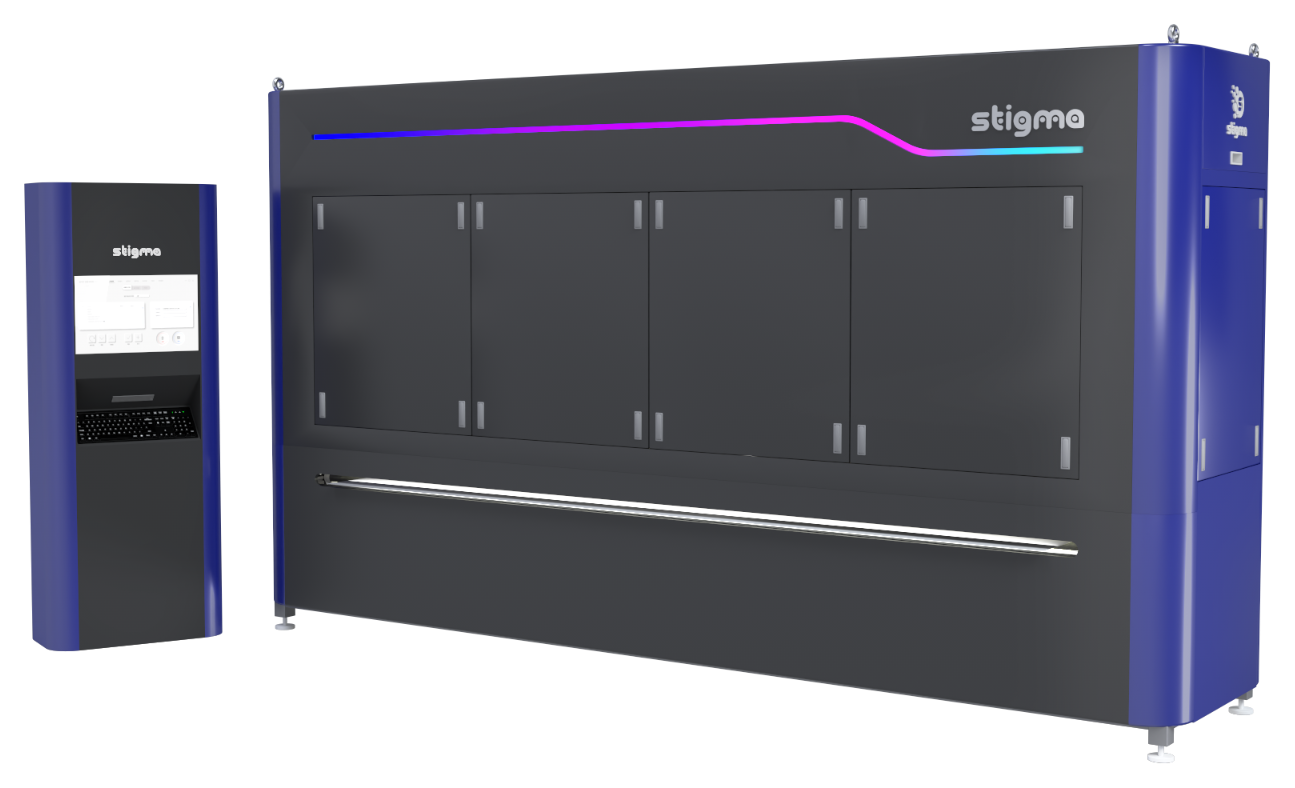
What do we inspect, and how?

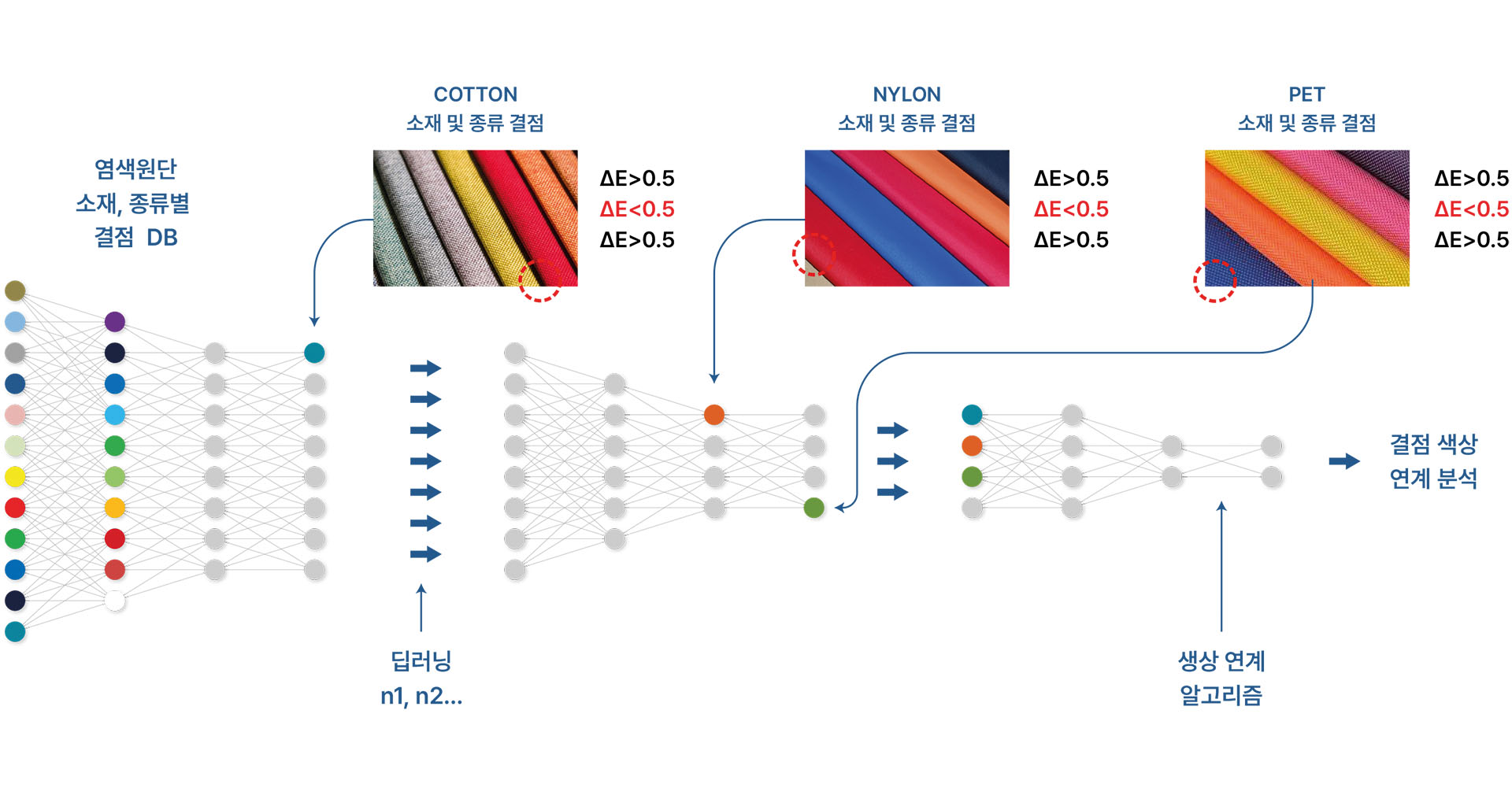
Color-difference analysis: Front/back and left/right color measurement using a spectrophotometer, CIE Lab and ΔE

AI anomaly detection: Unsupervised learning from normal data and classification of new defects

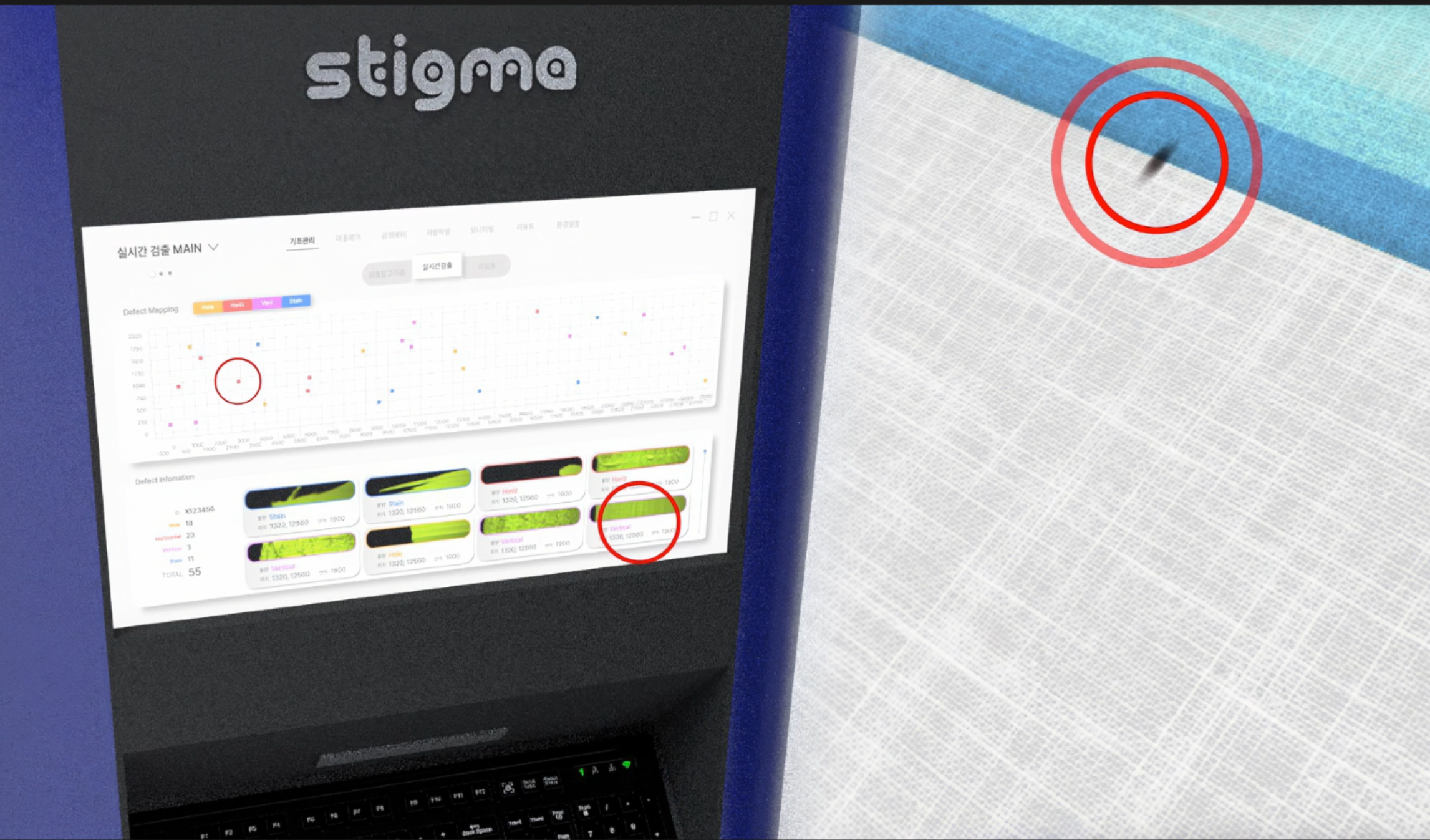
Cause analysis & automated reports: Result storage, type and cause analysis, and defect-history accumulation

MLOps & predictive maintenance: Automated labeling, continuous retraining and early equipment-anomaly detection
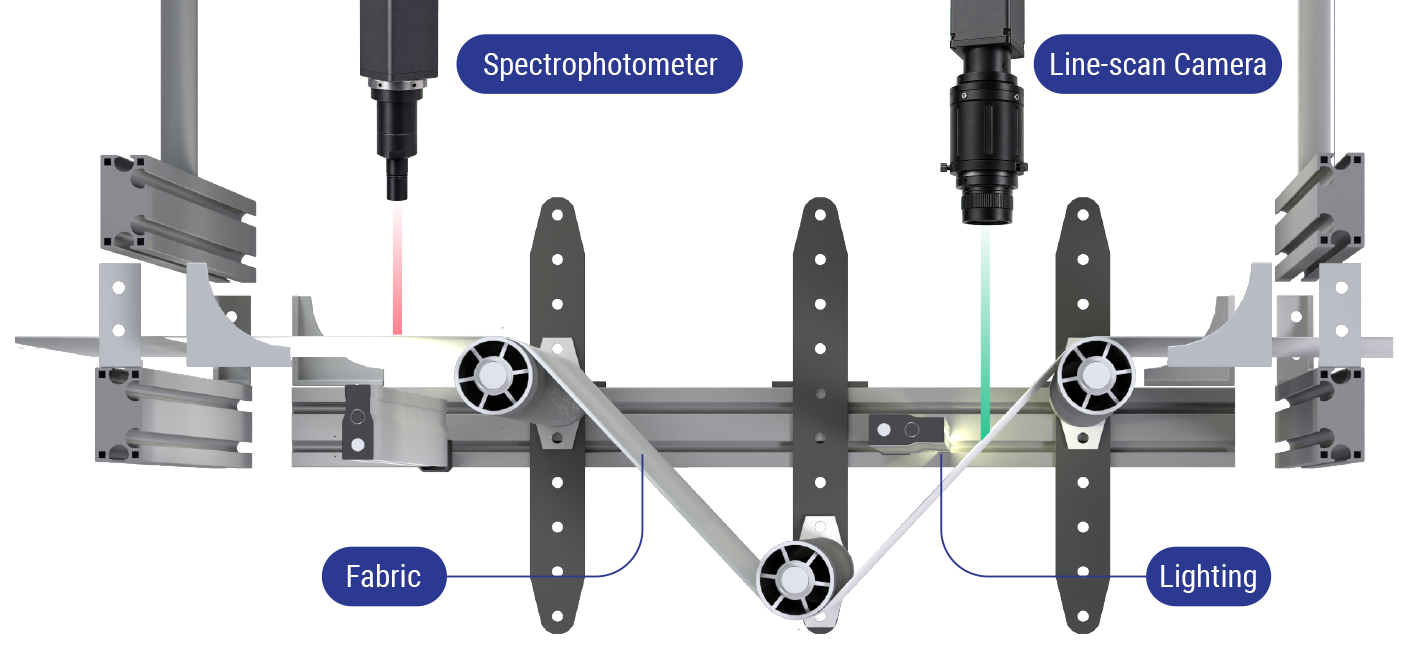
Machine vision engineered for high-speed fabric
- High-speed fabric defect image acquisition
- Encoder-based synchronization controller
- Inspection lighting and control system
- AI digital-twin predictive maintenance (PdM) based on field data
AI deep learning-based defect analysis
- AI deep learning-based defect inspection program
- AI Agent-based automatic labeling and MLOps pipeline
- Customized inspection solution UI/report configuration and visualization dashboard
Core system specifications
- Line-scan camera
- Stable image acquisition from rapidly moving fabric
CMOS · 7㎛ pixel · 8K resolution or higher - Line lens
- Machine-vision lens with minimized distortion and consistent resolution across the fabric width
- Image acquisition board
- Industrial FPGA frame grabber for high-speed capture and real-time streaming
- Spectrometer
- Collects reflectance across 380–780㎚ and converts it to CIE Lab values
Quantifies color difference ΔE against the reference color - Lighting system
- Inspection lighting that maintains constant brightness and prevents color distortion
- Synchronization controller
- Encoder-based speed measurement and trigger synchronization with automatic capture-timing correction
Defect-coordinate alignment and location tracking for reliable detection accuracy
What changes after deployment?
- 01

Digitalized, unmanned inspection
Creates a safer working environment
Helps address labor shortages in repetitive inspection work - 02

Consistent, high-precision quality control
Reduces defects and rework
Increases stable output of high-quality products - 03

AI-powered smart factory
Strengthens competitiveness through integrated digital quality monitoring
Deployment & verification cases
PoC verification in progress – upgrade planned